Dr. Jaime Castellano: A Legacy of Advocacy and Leadership in Gifted Education
Dr. Jaime Castellano made a lasting contribution to gifted education through his commitment to ensuring that giftedness was recognized, supported, and nurtured in students from diverse cultural and linguistic backgrounds. His work reflected an important shift in gifted education, from viewing giftedness through a narrow lens to recognizing the potential that existed within every community.
One of his most significant contributions was his advocacy for the identification and assessment of gifted bilingual and Hispanic students. His 1988 work, Identifying and Assessing Gifted Bilingual Hispanic Students, emphasized the importance of considering culture and language when identifying gifted learners. His perspective challenged educators to look beyond traditional measures and to recognize gifted potential that might otherwise have been overlooked.
Dr. Castellano also demonstrated that meaningful change in gifted education required collaboration among educators, families, and school programs. His leadership in educational settings helped promote the idea that gifted education should be connected to broader efforts to improve teaching, learning, and opportunities for underserved students. His career as an educator and educational leader spanned more than three decades and included roles as a teacher, principal, assistant superintendent, and superintendent.
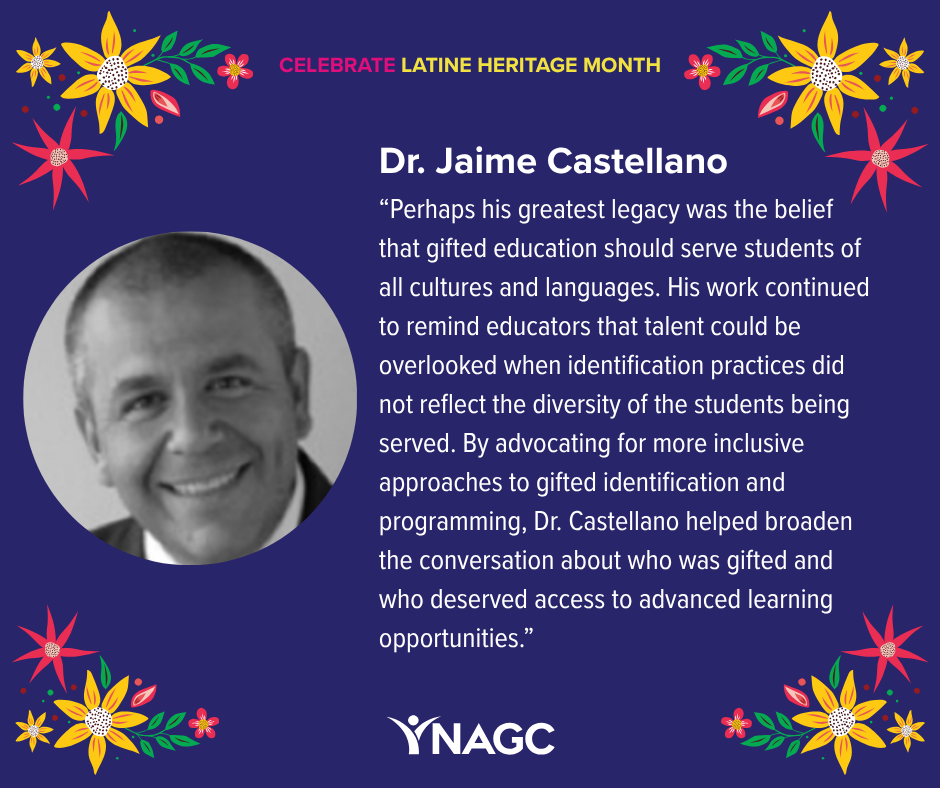
Perhaps his greatest legacy was the belief that gifted education should serve students of all cultures and languages. His work continued to remind educators that talent could be overlooked when identification practices did not reflect the diversity of the students being served. By advocating for more inclusive approaches to gifted identification and programming, Dr. Castellano helped broaden the conversation about who was gifted and who deserved access to advanced learning opportunities.
The legacy of Dr. Castellano was therefore measured not only by the programs or ideas he helped develop, but also by the students whose potential became visible because educators were encouraged to look differently. His work served as an enduring reminder that equity and excellence were not competing goals in gifted education—they were essential partners.
Books