Building Essential Bridges: Building Up Your Teachers with an Intentional Professional Learning Plan
By ElizaBeth Warner, M.Ed., NBCT, and Bailey Nafziger, Ed.D., Professional Learning Network Chair and Chair-Elect, respectively.
The work of gifted educators is specialized, complex, and constantly evolving. As we plan for 2026, the challenge is not merely to deliver professional learning (PL) but to build bridges—intentional, reliable connections that link theory to practice, isolation to collaboration, and potential to mastery. With thoughtful design, PL becomes the structural engineering that strengthens teacher self-efficacy and empowers educators to inspire, challenge, and support every gifted learner.
Self-efficacy for teaching refers to educators’ beliefs in their ability to influence student learning (Tschannen-Moran et al., 2001). High self-efficacy correlates with instructional persistence, enthusiasm, willingness to implement innovative practices, and comfort with instructional risk-taking (Aslan & Yurtal, 2023; Tschannen-Moran & Hoy, 2001). In gifted education, strong self-efficacy empowers teachers to support creativity, advance critical thinking, address social-emotional needs, and advocate for both students and their educational programs.
These bridges gain stability through four sources of self-efficacy (Bandura, 1977):
• Mastery experiences that allow teachers to see their own success.
• Observational experiences that let them observe peers modeling effective practice.
• Social encouragement through constructive feedback and encouragement.
• Emotional support that fosters resilience and confidence.
Below, we provide a few suggestions for engineering your 2026 PL bridge to promote your teachers’ self-efficacy.
The Foundation of Capacity
A bridge is only as strong as its foundation. Our capacity bridge must ensure that essential knowledge reaches every teacher efficiently and effectively. Try out these ideas below to provide opportunities for your teachers to engage in mastery experiences in their classrooms, which is just one source of self-efficacy.
-
The Resource Hub: Establish a central, easily searchable digital location to share with teammates, school colleagues, and district counterparts. This provides a solid foundation for all future learning, including housing identification protocols, advanced differentiation strategies, and research papers that focus on expanding student learning capacity.
-
"Gifted on the Go!": Combat the time crunch with high-impact, low-time-cost learning. Implement "Gifted on the Go!" by creating one-pagers of profiles of gifted students (showing their asynchronous development and potential learning ceilings) or quick strategy guides that can be shared during five minutes of a staff meeting. This keeps gifted education visible and digestible across the entire faculty.
-
Look to NAGC’s Resources: Embed high-quality, external guidance directly into your PL. Dedicate a session to reviewing and applying the practical wisdom found in NAGC tool sheets for guidance. These vetted tools minimize preparation time and maximize instructional fidelity, enabling teachers to fully engage with the depth of gifted learning capacity.
The Span of Courage and Confidence for Instructional Risk-Taking
Gifted instruction often requires high-level differentiation and instructional risk-taking. Teachers need the courage and confidence to implement complex strategies and to defend the necessity of appropriate services. We must create a safe space for professional experimentation and innovation. Try out one of the ideas below to provide your teachers with vicarious experiences as they observe their coworkers succeed with gifted pedagogy. As another source of self-efficacy, watching peers succeed increases teachers’ belief that they can too.
-
Pop-in Professional Learning: The Success Story Series: Build courage through authentic, peer-to-peer validation. Host a Pop-in PL series where you record district teachers in their rooms as they share their gifted story or a favorite strategy or idea. Seeing a colleague successfully implement a strategy provides immediate, relatable reassurance. An excellent addition to your Resource Hub!
-
Lunch Bunch & Book Study: Initiate informal, low-stakes settings like a Lunch Bunch or Book Study to discuss challenging topics with your teachers (like acceleration or twice-exceptionality). This format is key to meeting teachers where they are by respecting their existing expertise, focusing on inquiry, and offering flexible scheduling or locations that fit into their demanding workday. The casual setting encourages open discussion and builds the confidence to tackle complex concepts in the classroom.
The Arch of Trusting Relationships for Collaboration
Bridges are fundamentally about connection. Our most vital structures are the ones that link us professionally and personally, fostering genuine trusting relationships that sustain us through challenges. The third source of self-efficacy, social persuasion, is evident in the examples below:
-
The Round Table Strategy Share: Host a Round Table Session and invite your most successful peers to share a strategy that aligns with best practices, such as the implementation of hexagonal thinking for complex content analysis. This format promotes vulnerability and mutual respect.
-
Hybrid Professional Learning: When designing PL for the New Year, employ a Hybrid model. Invite teachers to join you in a live meet (virtual or in-person) for discussion, and then capture the recording and place it in your Resource Hub for others to access later. This flexibility respects time while maximizing engagement.
-
Share the Faces of Gifted: Use communication tools to recognize the human element. Share the faces of gifted individuals—not just the students, but also the teachers and administrators who champion their cause. This visible appreciation builds communal trust and morale.
The Supports of Advocacy and Visibility
Effective PL must equip teachers to be powerful advocates for their students and their program. This requires consistent visibility and clarity of purpose. The suggestions below may even tap into your teachers’ emotions, the fourth and final source of self-efficacy (i.e., physiological cues).
-
Develop Your Role as a Resource: Be intentional about how you develop your role as a resource for gifted individuals in your school, district, and community. When you become a reliable source of information, colleagues turn to you first, strengthening your program's influence.
-
Publish a Newsletter: Create a newsletter that details the latest PL initiatives, program successes, and available resources. This ensures stakeholders—from principals to parents—are aware of the expertise being developed and the program's impact. Be sure to look for our network’s newsletter coming soon to the Engage platform!
-
Addressing the Myths: Dedicate PL time to systematically address the myths of gifted children. Equip teachers with data and research to confidently counter resistance or misunderstanding, turning them into effective advocates for the program.
You also have a broader community ready to collaborate with you. NAGC offers networks, resources, and experts who can help you strengthen your program and deepen your PL design. Reach out to colleagues across local, state, and national levels—even your favorite NAGC presenter—and continue building your own professional bridge.
How will you build up your gifted teacher community?
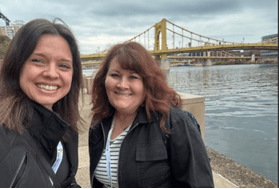
ElizaBeth & Bailey
PL Network Chair & Chair-Elect
References
Aslan, İ., and Yurtal, F. (2023). Classroom teachers' self-efficacy regarding gifted education. Journal for the Education of Gifted Young Scientists, 11(4), 557-568. DOI: http://dx.doi.org/10.17478/jegys.1377665
Bandura, A. (1977). Self-efficacy: Toward a unifying theory of behavioral change. Psychological Review, 84(2), 191–215. https://doi.org/10.1037/0033-295X.84.2.191
Tschannen‑Moran, M., & Hoy, A. W. (2001). Teacher efficacy: Capturing an elusive construct. Teaching and Teacher Education, 17(7), 783–805. https://doi.org/10.1016/S0742-051X(01)00036-1
Resources
Gifted Instruction and Methodologies by Arizona Department of Education